
Revision Total Hip Replacement in pune
When is Robotic Revision Total Hip Replacement Recommended?
Revision hip replacement may be required for several reasons:
Implant Loosening and Wear
For a Hip replacement to function properly, the implant must remain securely attached to the bone. During the primary surgery, components are either cemented or press-fit to allow bone growth.
Over time, however:
- Bone may fail to grow onto press-fit components
- Cemented components may loosen
- Plastic liner wear may occur
- High-impact activities may damage the implant
- Excess body weight may increase stress
Loosening often causes persistent hip pain and instability, requiring Robotic Revision Hip Replacement Surgery in Pune.

Recurrent Hip Dislocation
The hip joint functions as a ball-and-socket system. If the artificial ball repeatedly comes out of the socket, it is known as hip dislocation.
Recurrent dislocation may happen due to:
- Trauma
- Implant malposition
- Weak surrounding muscles
- Soft tissue imbalance
In such cases, revision surgery may be necessary to properly realign the joint or use a specialized implant to prevent future dislocations.
Periprosthetic Fracture
A fracture occurring around the hip implant is called a periprosthetic fracture.
Common causes include:
- Falls
- Trauma
- Osteoporosis
Treatment depends on:
- Implant stability
- Bone quality
- Location of fracture
Revision surgery is often required in these cases.
Infection

Infection is a serious complication that can occur shortly after surgery or even years later.
Bacteria can attach to the surface of the prosthesis, making it difficult to treat with antibiotics alone. Symptoms may include:
- Pain
- Swelling
- Drainage
- Fever
- Instability
Infected hip replacements frequently require staged or single-stage revision surgery.
Metal Reaction or Allergy
In rare cases, metal components may release microscopic particles over time. These particles can cause:
- Inflammation
- Bone loss
- Soft tissue damage
Patients with sensitivity to metal ions may experience persistent discomfort, sometimes requiring revision surgery.

Why Might You Need Revision Hip Replacement Surgery?
Your doctor may recommend revision hip surgery if:
- Previous hip replacement has failed
- Pain persists despite treatment
- Implant has loosened or dislocated
- Infection is present
- Bone damage has occurred
Revision surgery is usually considered only after conservative treatment options have failed.
Pre-Surgical Medical Evaluation
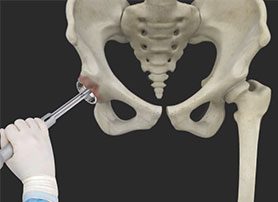
Before Robotic Revision Hip Replacement in Pune, patients undergo thorough evaluation:
✔ Physical Examination
Assessment of overall health and medical fitness for surgery.
✔ Imaging Tests
- X-rays to detect loosening or implant movement
- Bone scan (if needed)
- MRI or CT scan for detailed bone assessment
✔ Laboratory Tests
- Blood tests to detect infection
- Joint fluid aspiration if infection is suspected
Tests to evaluate metal ion levels (if required)
Home Planning Before Surgery
Since recovery may take time, patients may need:
- Assistance with daily activities
- Temporary rehabilitation facility stay
- Support for mobility
Advance planning helps ensure smooth post-surgical recovery.
Risks and Complications of Robotic Revision Hip Replacement
Revision hip replacement is more complex than primary hip surgery. Possible risks include:
- Infection
- Dislocation
- Leg length difference
- Blood clots
- Pulmonary embolism
- Bone not bonding to implant
- Heterotopic ossification (abnormal bone formation)
Robotic-assisted surgery enhances precision and may reduce alignment-related complications.
Procedure of Robotic Revision Total Hip Replacement
Revision hip replacement is technically demanding and may take several hours.
During Robotic Revision Hip Replacement Surgery in Pune, the surgeon will:
- Reopen or extend the previous incision
- Expose the hip joint
- Examine soft tissues for infection or metal reaction
- Remove worn or loose components
- Carefully remove old cement (if present)
- Preserve as much healthy bone as possible
- Address bone loss using metal augments or bone grafts
- Insert specialized revision implants
- Secure the cup with screws if required
- Check joint stability and mobility using trial implants
In rare cases, controlled separation of the femur may be required to remove a well-fixed implant stem.
A drain may be placed temporarily after surgery. Patients are then monitored in the recovery room before being shifted to their hospital room.
Recovery After Revision Hip Replacement
Recovery may take longer than primary hip replacement. Post-operative care includes:
- Pain management
- Early mobilization
- Physiotherapy
- Muscle strengthening exercises
- Gradual return to daily activities
Regular follow-up visits are essential to monitor implant stability and healing.
Why Choose Dr. Abhijit S. Agashe for Robotic Revision Hip Replacement in Pune?
Dr. Abhijit S. Agashe is a highly experienced Robotic Joint Replacement Surgeon in Pune, specializing in complex primary and revision hip surgeries.
His approach emphasizes the use of advanced robotic-assisted precision to ensure accurate implant positioning and effective management of bone loss. Each patient receives a personalized rehabilitation plan designed to support faster recovery and long-term joint stability.
Recognized for his expertise, Dr. Agashe is one of the trusted orthopedic specialists in Pune for advanced robotic hip and knee replacement procedures.
Why Choose Dr. Abhijit S. Agashe ?
Dr Abhijit S. Agashe is the Best Knee Replacement Surgeon in Pune who performs the surgery using all the advanced technology which gives the best result. He is the most experienced orthopedic surgeon in Pune
Agashe Clinic
- Research Award by Bone and Joint Decade – 2004
- Esteemed Fellowship Offered By The AO Group From Switzerland – 2008
- Fellowship With Prof. Willium Peterson From Germany In Sports Medicine – 2007
Address
- Office no 206, Siddharth Towers Building no 1 Near Karishma society, Kothrud, Pune, Maharashtra 411029
- 086006 53737
- puneortho@gmail.com


