
Robotic Joint Replacement Surgery in Pune – Precision and Faster Recovery
Robotic Joint Replacement Surgery in Pune
As a result, it should come as no surprise that computers now assist doctors, especially in procedures that require high accuracy. Over the past decade, extensive research has led to the development of the Navigation System for use in joint replacement surgery and other medical fields.
This advanced technology is now widely used in Robotic Joint Replacement Surgery in Pune to improve surgical precision and outcomes.
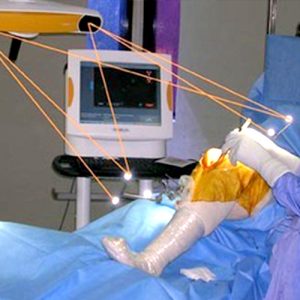
Understanding the Navigation System (GPS Example)
Imagine being stranded in the desert with only a satellite phone. Using GPS, your exact position can be identified because satellites track and triangulate your signal.
Similarly, in robotic-assisted surgery:
- Infrared cameras track surgical instruments
- Signals are sent to a computer console
- The system displays real-time joint positioning
- The surgeon receives guidance for accurate implant placement
This GPS-based principle improves the results of Robotic Knee Replacement Surgery in Pune and Robotic Hip Replacement Surgery in Pune.
Importance of Mechanical Alignment in Joint Replacement
Joint replacement surgery combines mechanical engineering and medical expertise.
The most important part of knee and hip replacement surgery is restoring proper mechanical alignment of the leg. During surgery, the surgeon evaluates:
- Angle of deformity
- Joint surface wear
- Size of damaged bone
- Ligament condition and stability
Earlier, all these steps were done manually, which sometimes led to minor human errors. If prosthetic components are not positioned correctly, they may wear out faster and fail early.
With robotic guidance, alignment accuracy improves significantly, helping implants last 12–15 years or more when properly placed.
An experienced Orthopedic Surgeon in Pune uses this system to achieve better precision and long-term success.
How Computer-Guided Navigation Works
The computer-guided method is also known as “Navigation” because it directs the surgeon throughout the procedure and alerts about potential errors.
The system includes:
- A computer console
- Touch screen display
- Infrared tracking cameras
- Specialized instruments with reflective trackers
These tools register anatomical landmarks and create a digital bone model. The system enhances surgical precision up to 0.5 degrees and 1 millimetre.
This technology helps improve both:
✔ Bone cut accuracy
✔ Soft tissue balance
Proper ligament balancing is essential for a stable joint and good range of motion.
Benefits of Robotic Joint Replacement
The use of Robotic Joint Replacement Surgery in Pune offers several advantages:
- Smaller surgical incision
- Reduced soft tissue damage
- Improved implant positioning
- Better joint stability
- Less muscle injury
- Faster recovery
- Reduced hospital stay
In many cases, knee and hip replacement can be performed through a 10–12 cm incision in suitable patients.
Patients may:
- Stand and walk by the third day
- Be discharged within five days
- Recover faster due to minimally invasive techniques
This modern approach supports safer and more precise outcomes under the guidance of an experienced Orthopedic Doctor in Pune.
Frequently Asked Questions
Robotic Joint Replacement Surgery in Pune is an advanced, computer-guided procedure used for knee and hip replacement. It uses navigation technology to improve the accuracy of bone cuts and implant positioning, helping the Orthopedic Surgeon in Pune achieve better alignment and long-term results.
In traditional knee replacement, implant positioning is done manually. In Robotic Knee Replacement Surgery in Pune, a navigation system provides real-time feedback during the procedure.
This helps in:
- More precise implant placement
- Better mechanical alignment
- Reduced chances of early implant wear
Improved joint stability
Yes, Robotic Hip Replacement Surgery in Pune is considered safe when performed by an experienced Orthopedic Doctor in Pune. The computer-guided system improves accuracy and reduces technical errors, which may lower the risk of complications related to implant positioning.
A well-performed robotic joint replacement can last 12 to 15 years or more. The lifespan depends on:
- Implant quality
- Surgical accuracy
- Patient activity level
- Post-surgery rehabilitation
Proper alignment achieved through robotic assistance plays an important role in improving durability.
Agashe Clinic
- Research Award by Bone and Joint Decade – 2004
- Esteemed Fellowship Offered By The AO Group From Switzerland – 2008
- Fellowship With Prof. Willium Peterson From Germany In Sports Medicine – 2007
Address
- Office no 206, Siddharth Towers Building no 1 Near Karishma society, Kothrud, Pune, Maharashtra 411029
- 086006 53737
- puneortho@gmail.com


